June Grape Cluster Thinning Impact on Final Wine Quality
Understanding the Science Behind June Cluster Thinning
Picture this: you’re walking through a vineyard in early June, and every vine carries dozens of grape clusters. But here’s what most people don’t realize – keeping all those clusters will actually hurt your wine quality. The science behind grape cluster thinning reveals why less truly becomes more in winemaking.
June represents a critical window when vines are actively developing their fruit, making strategic cluster removal one of the most impactful decisions a winemaker can make. This practice, backed by decades of viticultural research, directly influences everything from sugar concentration to flavor complexity in your final bottle.
Why June Timing is Critical for Vine Development
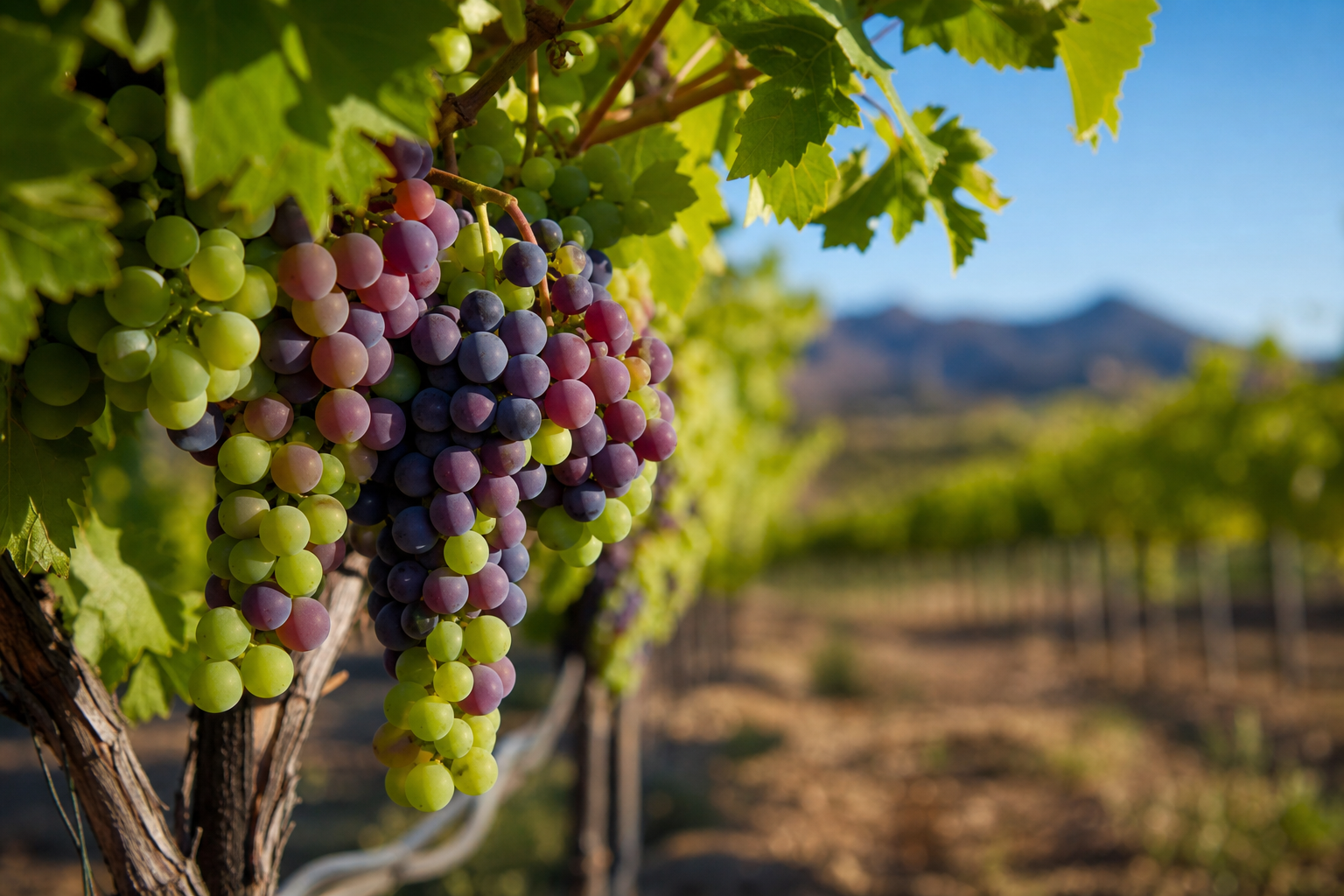
June timing aligns perfectly with the vine’s physiological calendar. During this period, grape clusters have completed their initial fruit set but haven’t yet entered veraison (the color change phase). This sweet spot allows winemakers to assess cluster quality while the vine can still redirect its energy effectively.
The vine’s energy allocation system works like a business budget – there’s only so much to go around. When you remove excess clusters in June, the remaining fruit receives concentrated nutrients and photosynthetic energy. Research shows that vines thinned during this window can increase sugar accumulation by 15-20% compared to unthinned vines.
Temperature patterns in Temecula during June create ideal conditions for this work. The moderate morning temperatures allow vineyard workers to assess cluster quality without heat stress, while afternoon warmth helps the vine quickly heal from the pruning cuts. This timing also precedes the intense summer heat that could stress recently thinned vines.
Physiological Changes During Early Summer Growth
Early summer marks a dramatic shift in vine physiology. The plant transitions from vegetative growth to reproductive focus, meaning every leaf becomes a solar panel feeding the developing fruit. During June, grape clusters are actively accumulating organic acids and beginning their sugar development process.
Cell division within the berries reaches peak activity during this period. When clusters are thinned now, the remaining berries can achieve larger cell sizes and better internal structure. This cellular development directly impacts the wine’s mouthfeel and aging potential – something you’ll notice during future wine tasting experiences.
The vine’s root system also responds to June thinning by concentrating its mineral uptake for fewer clusters. This intensified nutrient flow creates grapes with better phenolic development, resulting in wines with deeper color and more complex flavor profiles. Professional winemakers often describe thinned grapes as having “more concentrated character” – this is the physiological reason why.
How Cluster Reduction Affects Sugar and Acid Development
Sugar and acid balance forms the foundation of wine quality, and June cluster thinning dramatically influences this relationship. When you reduce cluster load, the remaining grapes receive concentrated photosynthetic energy, accelerating sugar accumulation while maintaining optimal acid retention.
The math is straightforward: a vine with 30 clusters will produce grapes with lower sugar concentration than the same vine carrying 15 clusters. But the relationship isn’t linear. Sustainable vineyard practices show that strategic thinning can increase final Brix levels by 2-3 degrees while preserving the bright acidity that gives wines their structure.
Acid development follows a different timeline. During June, grapes contain high levels of malic and tartaric acids. Thinning allows these acids to concentrate while preventing the dilution that occurs in overcropped vines. This acid preservation becomes crucial for wine balance, especially in warm climates where acid retention challenges winemakers throughout the growing season.
The Role of Canopy Management in Thinning Success
Canopy management and cluster thinning work as integrated systems. The leaf-to-fruit ratio determines how effectively your thinning efforts translate into quality improvements. Optimal ratios typically range from 12-15 leaves per cluster, depending on grape variety and climate conditions.
Proper canopy management ensures adequate sunlight penetration and air circulation around remaining clusters. This microclimate control reduces disease pressure while promoting even ripening. When combined with strategic thinning, well-managed canopies can improve grape quality by 25-30% over untreated vines.
The positioning of remaining clusters also matters. Thinning should prioritize keeping clusters in optimal canopy positions – typically those receiving morning sun but protected from intense afternoon heat. This selective approach, combined with sustainable vineyard practices creates the ideal environment for premium grape development.
Understanding these scientific principles helps explain why June cluster thinning remains a cornerstone practice among quality-focused winemakers. The physiological changes triggered during this critical period set the foundation for exceptional wine quality.
Implementing Effective Thinning Strategies
Identifying Which Clusters to Remove
Effective grape cluster thinning requires strategic selection of which clusters to remove from each vine. The primary targets are clusters showing poor development, uneven berry set, or those positioned in areas with limited sun exposure. Clusters growing near the base of shoots often receive insufficient light and should be prioritized for removal.
Secondary clusters, which develop later than the primary clusters, typically produce lower-quality fruit and consume valuable vine energy. These smaller, less developed clusters rarely reach optimal ripeness and often dilute the overall vintage development potential when left on the vine.
Damaged clusters showing signs of disease, insect damage, or mechanical injury must be removed immediately to prevent spread to healthy fruit. Additionally, clusters positioned too close to the ground face increased risk of soil contamination and should be eliminated during the thinning process.
Tools and Techniques for Efficient Thinning
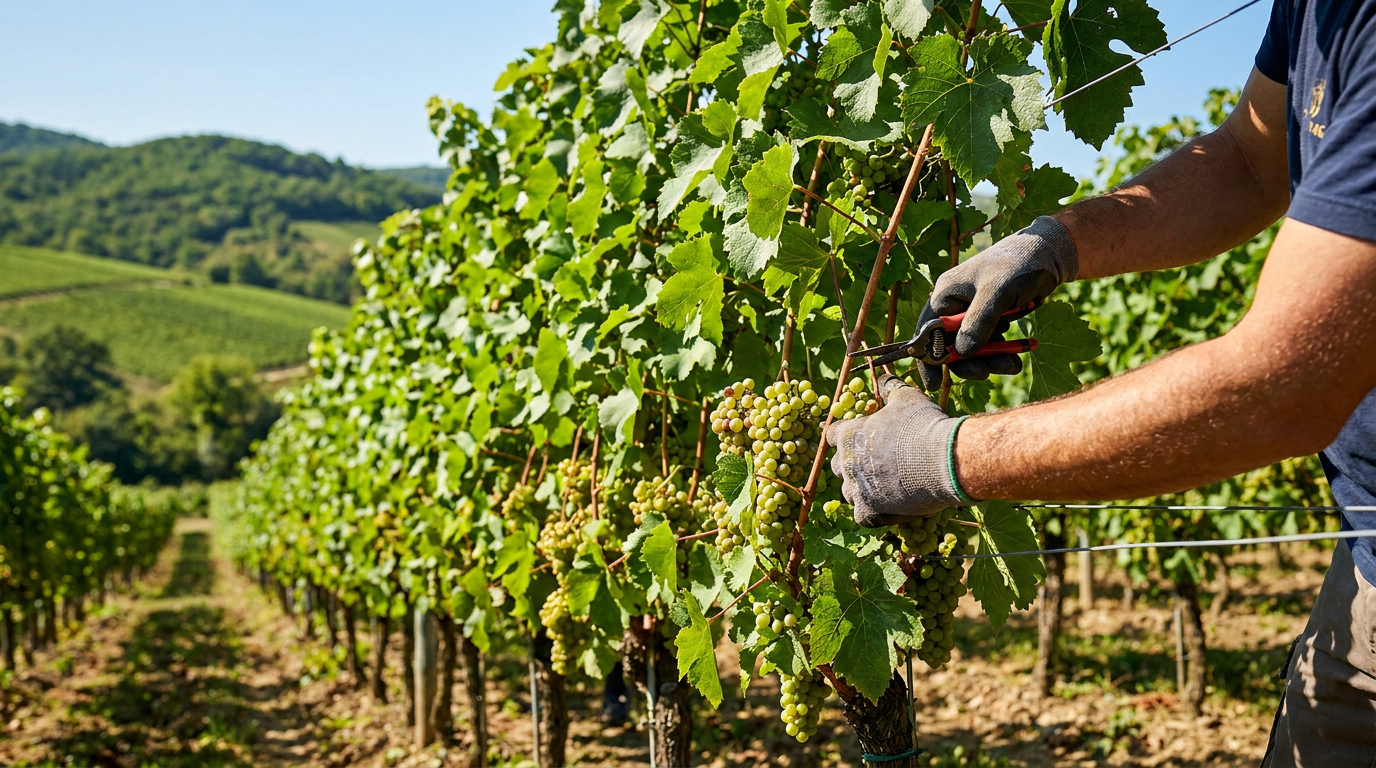
Sharp, clean pruning shears represent the most essential tool for grape cluster thinning operations. The blades must be sanitized between vine blocks to prevent disease transmission, particularly when working with premium varietals destined for estate wines.
Hand-held cluster thinning scissors offer greater precision for delicate work around developing fruit. These specialized tools allow vintners to make clean cuts without damaging remaining clusters or disrupting the vine’s vascular system. Many Temecula wineries invest in ergonomic handles to reduce worker fatigue during extended thinning sessions.
Digital cluster counters help maintain consistent removal rates across vineyard blocks. Workers can track the number of clusters removed per vine, ensuring uniform treatment throughout the vineyard. Some operations use color-coded tags to mark vines requiring additional attention during subsequent passes.
Timing proves critical for effective thinning techniques. The optimal window occurs when clusters are approximately pea-sized, typically 6-8 weeks after bloom. This timing allows for accurate assessment of cluster quality while minimizing stress on the developing fruit.
Determining Optimal Cluster Load by Variety
Different grape varieties require specific cluster loads to achieve optimal wine quality. Cabernet Sauvignon typically performs best with 4-6 clusters per shoot, while Pinot Noir often benefits from more aggressive thinning to 2-4 clusters per shoot. These targets must be adjusted based on vine age, vigor, and growing conditions.
Chardonnay vines generally support higher cluster loads than red varieties, often maintaining quality with 6-8 clusters per shoot. However, premium Chardonnay production may require more aggressive thinning to concentrate flavors and achieve the complexity expected in high-end wines.
Vine age significantly influences optimal cluster load calculations. Young vines (1-5 years) should carry minimal fruit to encourage root development and structural growth. Mature vines (10+ years) can support heavier loads while still producing quality fruit, though excessive cropping always compromises wine quality.
Temecula’s Mediterranean climate allows for precise cluster load management through extended growing seasons. Vintners can make multiple thinning passes, fine-tuning cluster numbers based on weather patterns and vine response throughout the growing season.
Managing Labor Costs and Timing Logistics
Labor represents the largest expense in grape cluster thinning operations, often accounting for 60-70% of total vineyard management costs during June. Efficient crew scheduling and training programs help minimize these expenses while maintaining quality standards.
Experienced workers can thin approximately 0.5-1 acre per day, depending on vine density and cluster load targets. New workers typically require 2-3 days of training to achieve consistent results without damaging vines or remaining fruit clusters.
Weather windows significantly impact thinning logistics. Work must be suspended during rain events to prevent disease transmission and worker safety issues. Early morning sessions often prove most productive, as workers can complete more precise work before afternoon heat impacts concentration levels.
Many operations implement piece-rate payment systems to incentivize productivity while maintaining quality standards. Quality control supervisors make random inspections to ensure proper technique and cluster selection throughout the vineyard blocks.
Coordination with other vineyard operations requires careful scheduling. Thinning crews must work around spray applications, irrigation maintenance, and soil preparation activities that support optimal growing conditions.
Impact on Grape Composition and Maturation
Enhanced Phenolic Development and Color Concentration
June grape cluster thinning creates a profound shift in phenolic compound development that directly translates to enhanced wine quality. When sustainable vineyard practices include strategic cluster removal, the remaining grapes receive concentrated nutrients and energy that would otherwise be distributed across a larger crop load.
The enhanced phenolic development begins immediately after thinning. With reduced competition for vine resources, remaining clusters develop thicker skins with higher concentrations of anthocyanins and flavonoids. This means deeper color intensity and more complex flavor compounds. Red varieties like Cabernet Sauvignon and Merlot show particularly dramatic improvements, often displaying 20-30% higher color density in the finished wine.
In Temecula’s Mediterranean climate, June thinning optimizes the relationship between sunlight exposure and phenolic synthesis. The remaining clusters benefit from increased air circulation and light penetration, creating ideal conditions for phenolic maturation without excessive heat stress. This balance proves especially critical during the intense summer months ahead.
Improved Sugar Accumulation and Flavor Intensity
Sugar accumulation patterns change dramatically when cluster thinning reduces crop load during June. The vine redirects photosynthetic energy from quantity to quality, resulting in more concentrated sugar development in the remaining fruit. This concentration extends beyond simple Brix levels to include complex flavor precursors that define varietal character.
Research consistently shows that properly thinned vines achieve target sugar levels 7-14 days earlier than unthinned counterparts. This earlier ripening window provides greater harvest flexibility and reduces exposure to late-season weather risks. For Temecula wineries, this timing advantage often means the difference between optimal harvest conditions and challenging heat spikes.
The improved sugar-to-acid balance creates wines with better structure and aging potential. Enhanced sugar accumulation coincides with more gradual acid reduction, resulting in grapes that reach physiological maturity with optimal flavor development. This synchronization proves particularly valuable for premium varietals that require extended hang time for complexity.
Flavor intensity improvements become apparent through increased concentration of volatile compounds responsible for varietal character. Terpenes in aromatic whites and esters in reds develop more fully when competition from excess clusters is eliminated. The result? Wines that express their varietal characteristics with greater clarity and intensity.
Effects on Tannin Structure and Wine Aging Potential
Tannin development represents one of the most significant quality improvements from June cluster thinning. Reduced crop load allows remaining grapes to develop more mature, polymerized tannins rather than harsh, astringent compounds often associated with overcropped vines. This shift creates wines with better mouthfeel and enhanced aging potential.
The concentration effect on tannin structure becomes particularly evident in the seed-to-skin ratio. Thinned clusters develop larger berries with proportionally more skin surface area, leading to higher concentrations of skin tannins. These contribute elegance and complexity compared to the often bitter seed tannins that dominate in stressed, overcropped fruit.
Extended hang time made possible by earlier ripening allows tannins to polymerize naturally on the vine. This process creates wines that taste smoother upon release and develop more gracefully during barrel aging and bottle maturation. The investment in cluster thinning pays dividends for years in the cellar.
Balancing Yield Reduction with Quality Gains
The economic reality of cluster thinning requires careful consideration of yield reduction against quality improvements. Typical June thinning reduces crop yield by 15-35%, depending on initial cluster density and target quality levels. However, quality gains often justify these reductions through higher per-bottle pricing and improved market positioning.
Professional winemakers calculate the optimal thinning percentage based on vine capacity, market positioning, and vintage goals. Young vines might require more aggressive thinning to prevent exhaustion, while mature vines with established root systems can support moderate crop loads while maintaining quality. Each vineyard block requires individual assessment.
The quality gains from cluster thinning become measurable through improved grape chemistry at harvest. Higher phenolic content, better sugar-to-acid ratios, and enhanced flavor concentration translate directly to superior wine scores and consumer acceptance. Many Temecula producers find that thinned blocks consistently produce their premium reserve wines.
Long-term vineyard health benefits add another dimension to the yield-quality equation. Properly managed crop loads prevent vine exhaustion and extend productive vineyard life. The practice supports consistent quality vintage after vintage, building brand reputation and customer loyalty that extends far beyond immediate harvest returns.
Vineyard-Specific Considerations for Thinning
Adapting Techniques for Different Soil Types
Soil composition directly influences how aggressively vineyard managers should approach grape cluster thinning. Sandy soils, common in parts of Temecula, drain quickly and stress vines naturally, which means less aggressive thinning is typically required since the vines already limit their own production. Clay-heavy soils retain moisture longer, encouraging vigorous growth that demands more intensive cluster removal to achieve quality concentration.
Volcanic soils present unique challenges for thinning decisions. These mineral-rich environments often produce exceptionally flavorful grapes but with inconsistent cluster development. Experienced vineyard teams working with winery operations in volcanic terroir typically thin 30-40% more clusters compared to standard sandy loam conditions.
Limestone-based soils require careful timing adjustments. The high pH levels affect nutrient uptake, meaning cluster thinning should occur slightly earlier in June to compensate for slower vine response times. Rocky soils with good drainage benefit from moderate thinning approaches, as natural vine stress already contributes to quality concentration.
Climate and Microclimate Factors
Temecula’s Mediterranean climate creates distinct microclimates within individual vineyard blocks. South-facing slopes receive intense afternoon sun, requiring more aggressive cluster thinning to prevent sunburn and maintain balanced ripening. North-facing slopes benefit from gentler thinning approaches since cooler conditions naturally extend hang time.
Wind patterns significantly impact thinning strategies. Vineyards exposed to consistent afternoon breezes can support slightly higher cluster loads since air circulation helps prevent fungal pressure and maintains healthy canopy conditions. Protected valleys with limited airflow demand more intensive thinning to compensate for potentially problematic humidity levels.
Elevation differences of just 100 feet can alter thinning requirements substantially. Higher elevation blocks experience cooler nighttime temperatures, preserving acidity naturally. These sites often require less aggressive cluster removal compared to warmer valley floor locations where sustainable vineyard practices become crucial for maintaining quality.
Morning fog penetration affects cluster development timing. Blocks that receive regular marine layer influence ripen more slowly, allowing vineyard managers to delay thinning decisions until mid-to-late June for more accurate assessment of final cluster potential.
Varietal-Specific Thinning Approaches
Cabernet Sauvignon demands aggressive cluster thinning due to its naturally prolific production. Successful Cabernet blocks typically require removing 40-50% of clusters, focusing on secondary and tertiary clusters while preserving the primary clusters closest to the main trunk. The varietal’s thick skins benefit from reduced competition, allowing concentrated phenolic development.
Pinot Noir presents opposite challenges, producing fewer but larger clusters naturally. Thinning focuses on cluster size reduction rather than complete removal, often involving tip removal from oversized clusters. This delicate approach preserves the varietal’s naturally limited production while ensuring even ripening.
Chardonnay cluster thinning varies dramatically based on intended wine style. Sparkling wine production benefits from higher cluster loads with minimal thinning, preserving natural acidity. Still wine production requires moderate thinning, typically 25-30% cluster removal, focusing on maintaining balanced sugar-to-acid ratios.
Syrah responds well to selective thinning based on cluster position. Clusters growing in shaded interior canopy positions should be removed first, while sun-exposed clusters receive priority retention. This varietal benefits from maintaining clusters with direct morning sun exposure.
Managing Vine Age and Vigor Differences
Young vines under five years require minimal cluster thinning since their limited root systems naturally restrict production. Aggressive thinning on young vines can actually stress them unnecessarily, potentially affecting long-term vine health and establishment.
Mature vines between 10-25 years represent the sweet spot for cluster thinning effectiveness. These established vines respond predictably to thinning practices, with removed clusters redirecting energy efficiently to remaining fruit. Standard thinning protocols work most effectively on vines in this age range.
Older vines exceeding 30 years often produce naturally smaller crops with concentrated flavors. These heritage blocks typically require gentler thinning approaches, as their deep root systems and natural production limitations already contribute to quality concentration. Over-thinning old vines can reduce yields without proportional quality improvements.
Vigor management directly influences thinning intensity. High-vigor vines with excessive vegetative growth require more aggressive cluster removal to redirect energy toward fruit development. Low-vigor vines under stress conditions need careful assessment before thinning, as additional stress might compromise overall vine health.
Root system health affects thinning decisions significantly. Vines with compromised root systems from previous stress or disease require conservative thinning approaches to maintain adequate leaf-to-fruit ratios for sustainable vine function.
Measuring Quality Improvements in the Cellar
Tracking Brix, pH, and Acid Levels at Harvest
The most immediate way to measure grape cluster thinning success comes through harvest-time chemistry analysis. Thinned vines consistently produce grapes with higher Brix levels, typically showing a 2-4 degree increase compared to unthinned blocks. This concentration boost translates directly to higher potential alcohol and more intense flavors in the finished wine.
pH levels also benefit significantly from thinning practices. While unthinned grapes often struggle to achieve optimal pH balance (especially in warmer Temecula growing seasons), thinned clusters maintain better acid retention throughout maturation. Target pH ranges of 3.4-3.6 for reds and 3.2-3.4 for whites become much more achievable when cluster loads are properly managed.
Titratable acidity measurements reveal another crucial advantage. Thinned grapes maintain higher natural acid levels at harvest, reducing the need for acidification during winemaking. This preservation of natural acids creates more balanced wines with better aging potential and enhanced food pairing capabilities.
Evaluating Color Density and Phenolic Extraction
Visual assessment immediately reveals the quality improvements from cluster thinning. Red grapes from thinned vines show deeper, more saturated color development at harvest. Spectrophotometer readings consistently demonstrate 15-25% higher anthocyanin levels in thinned fruit compared to standard crop loads.
Phenolic compound development benefits tremendously from reduced cluster density. Thinned grapes develop thicker skins with more concentrated tannins, creating wines with better structure and aging potential. Laboratory analysis of skin-to-pulp ratios shows thinned clusters achieving optimal extraction potential weeks earlier than unthinned blocks.
The impact extends beyond simple concentration. Thinned grapes develop more complex phenolic profiles, with better integration between different tannin types. This complexity becomes evident during sustainable winemaking practices where gentle extraction methods can fully capture these enhanced characteristics.
Color stability testing also demonstrates superior performance. Wines from thinned grapes maintain their color intensity longer during aging, showing less degradation over time. This stability directly correlates with higher market value and consumer satisfaction.
Fermentation Performance and Wine Structure
Fermentation behavior provides clear evidence of grape cluster thinning benefits. Higher sugar concentrations in thinned grapes create more favorable conditions for yeast activity, typically resulting in cleaner, more complete fermentations. Stuck or sluggish fermentations become rare when working with properly thinned fruit.
Temperature control becomes easier during fermentation of thinned grapes. The improved sugar-to-water ratio means less volume to manage while maintaining target extraction levels. This efficiency allows winemakers to focus on refining techniques rather than troubleshooting basic fermentation problems.
Wine structure improvements appear immediately after primary fermentation. Tannin integration happens more naturally with thinned fruit, reducing the need for extended aging to achieve balance. Mid-palate depth and finish length show marked improvement, creating wines that perform better in competitive tastings.
Malolactic fermentation proceeds more predictably with thinned fruit. Better nutrient balance and pH levels create optimal conditions for beneficial bacteria, reducing the need for inoculation and resulting in more natural wine development.
Long-term Aging and Bottle Development
The most significant quality improvements from grape cluster thinning become apparent during extended aging periods. Wines made from thinned grapes show superior aging curves, developing complexity while maintaining freshness over longer timeframes. This enhanced aging potential directly impacts barrel aging decisions and release timing strategies.
Bottle evolution demonstrates remarkable differences between thinned and unthinned fruit. After 24 months in bottle, wines from thinned grapes typically show better integration and more refined character development. Color retention remains superior, while flavor complexity continues expanding rather than declining.
Tasting panel evaluations consistently rate wines from thinned grapes higher across all quality metrics. Professional judges note improved balance, enhanced varietal character, and better overall harmony in wines made from properly managed crop loads. These improvements translate directly to higher scores in competitions and better market reception.
Long-term storage studies reveal another crucial advantage. Wines from thinned grapes maintain their peak quality longer, extending optimal drinking windows by 2-3 years. This longevity creates significant value for both producers and consumers, justifying premium pricing strategies and building brand reputation for quality and consistency.
Economic Analysis and Return on Investment
Cost-Benefit Analysis of Thinning Programs
The financial mathematics of grape cluster thinning reveal compelling returns when properly executed. Labor costs for thinning typically range from $800 to $1,200 per acre, depending on vine density and crew efficiency. This investment represents roughly 8-12% of total annual vineyard operating expenses, yet the impact on final wine value can exceed 25-40% through improved grape quality and subsequent premium pricing opportunities.
Consider the economics of a 10-acre vineyard block where thinning reduces yield from 4.5 tons per acre to 3.2 tons per acre. While this represents a 29% reduction in volume, the concentrated flavors and improved grape composition often translate to wines that command 35-50% higher bottle prices. A winery producing 1,000 cases from unthinned grapes at $28 per bottle versus 700 cases from thinned grapes at $42 per bottle demonstrates the mathematical advantage clearly.
The timing of return on investment varies by market segment. Premium estate wines typically show immediate pricing benefits within 12-18 months of release, while building long-term brand equity requires consistent quality execution over multiple vintages. Smart thinning programs also reduce sorting costs at harvest, as uniformly ripe clusters require less manual selection during processing.
Premium Pricing Potential for Quality Improvements
Market research consistently shows consumer willingness to pay premium prices for demonstrably superior wine quality. Thinned vineyard blocks producing wines with enhanced color density, balanced acidity, and complex flavor profiles can justify price points 20-60% above regional averages. This premium positioning becomes particularly valuable in competitive markets where differentiation drives purchasing decisions.
The quality improvements achieved through strategic thinning translate directly into wine competition scores and critical reviews. Wines scoring 90+ points typically command market premiums of $15-25 per bottle compared to wines scoring in the 85-89 range. For Temecula wineries, this quality differential can transform a $22 bottle into a $35-40 offering, fundamentally changing the business model and profit margins.
Premium pricing sustainability requires consistent execution across multiple growing seasons. Wineries that implement systematic thinning protocols often develop reputation for reliability, allowing them to maintain higher price points even during challenging market conditions. The compound effect of this positioning creates substantial long-term value beyond immediate vintage returns.
Labor Investment vs. Market Value Returns
Calculating true return on thinning labor investment requires analyzing both immediate harvest benefits and downstream processing efficiencies. Properly thinned vineyards typically require 20-30% less sorting time during harvest, reducing cellar labor costs by $200-400 per ton processed. The improved grape uniformity also enhances fermentation predictability, reducing the need for costly interventions during winemaking.
The skilled labor required for effective thinning represents an investment in vineyard team education and long-term capability building. Training crews to recognize optimal cluster selection criteria creates value that extends beyond single-season applications. Experienced thinning teams can complete work 25-35% faster while achieving better results, improving the cost-benefit equation significantly over time.
Market volatility analysis shows that quality-focused vineyards maintain more stable pricing during economic downturns. While volume-driven operations may see 15-25% price reductions during challenging years, premium quality wines from thinned vineyards typically experience only 5-10% pricing pressure, protecting long-term profitability.
Building Brand Reputation Through Consistent Quality
The relationship between systematic cluster thinning and brand building creates exponential returns that compound over multiple vintages. Wineries known for consistent quality execution develop loyal customer bases willing to pay premium prices and purchase wines before release. This loyalty translates into predictable cash flow and reduced marketing costs, as satisfied customers become brand ambassadors.
Professional wine buyers and distributors increasingly seek reliable quality sources for their portfolios. Wineries demonstrating vintage-to-vintage consistency through disciplined vineyard practices like cluster thinning often secure long-term contracts with favorable terms. These relationships provide stability that justifies the ongoing investment in quality-focused farming practices.
The digital age amplifies the importance of consistent quality, as online reviews and social media discussions can rapidly enhance or damage brand reputation. Wineries producing consistently excellent wines through proper thinning protocols build positive online presence that drives direct-to-consumer sales and reduces dependence on traditional distribution channels. For wine enthusiasts seeking exceptional quality experiences, visiting a winery known for meticulous vineyard management creates lasting impressions that drive repeat visits and word-of-mouth recommendations throughout the growing wine community.
Related Posts
- Why February is the Perfect Month for Private Wine Tastings in Temecula
- Sustainable Vineyard Practices That Define Modern Temecula Wineries
- How Winter Grape Dormancy Influences Next Season’s Vintage Quality
- Barrel Aging Timeline Analysis for Current Vintage Development
- March Vineyard Soil Preparation Strategies for Optimal Spring Growth
- Women Pioneers Who Shaped California’s Vineyard Industry
- How March Weather Patterns Affect Grape Varietal Selection
- March Planting Windows for New Vineyard Development
- Sustainable Cover Crop Management During Spring Transition
- Irrigation System Testing Before Peak Growing Season
- Vineyard Labor Planning for 2026 Growing Season
- March Fertilization Programs for Premium Wine Grapes