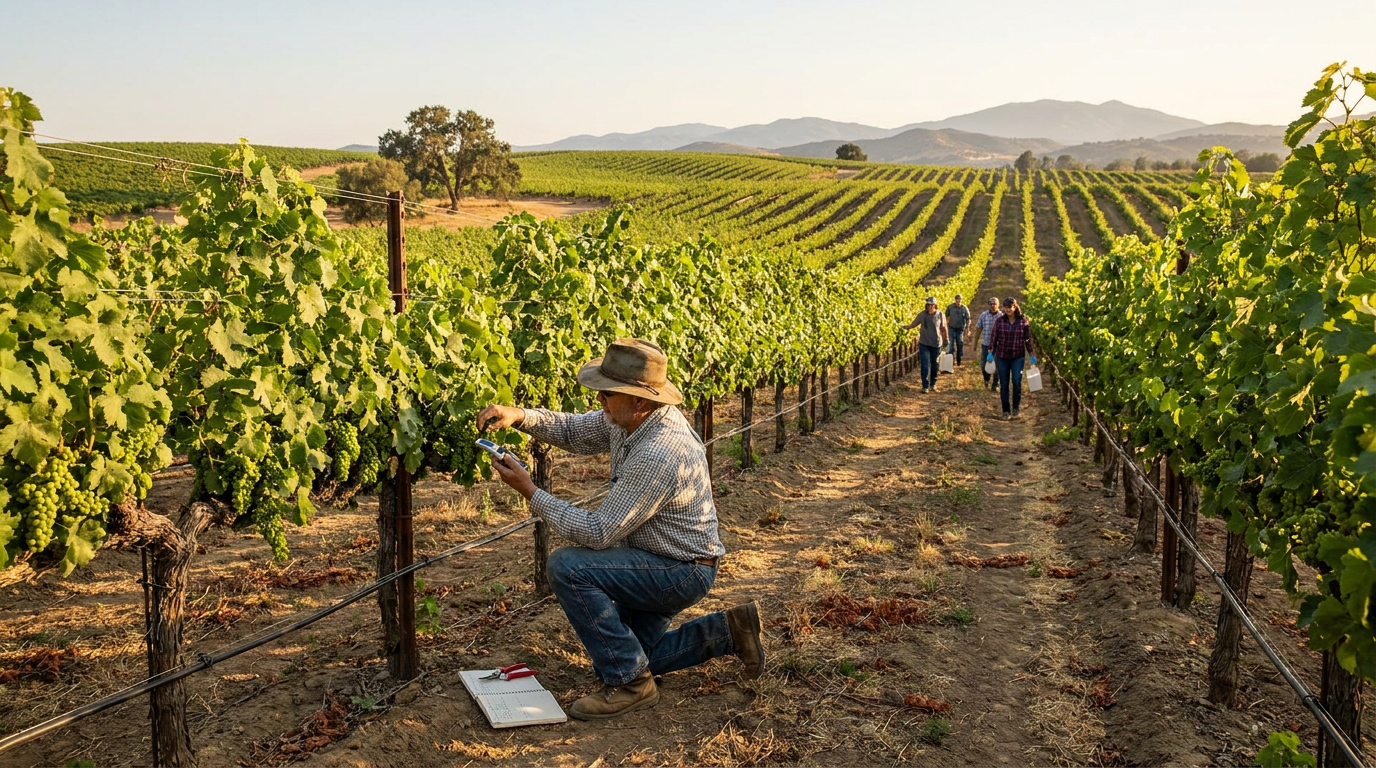
June Harvest Preparation Timeline for Vineyard Operations
Essential Vineyard Assessment and Planning
The moments before harvest represent the culmination of an entire year’s work in the vineyard. Every decision made during these critical weeks of preparation will echo through the final bottles, making thorough assessment and meticulous planning absolutely essential for quality wine production.
In Temecula’s unique Mediterranean climate, June marks the beginning of the most intense preparation period for vineyard operations. The combination of warm days and cool nights creates optimal conditions for grape development, but it also means harvest windows can shift quickly based on weather patterns and grape maturity levels.
Evaluating Grape Maturity and Sugar Content Levels
Accurate grape maturity assessment begins with systematic sampling across all vineyard blocks. Start by collecting samples from different elevations and exposures within each block, as microclimates can create significant variation in ripening patterns. Testing should occur twice weekly starting in early June, measuring Brix levels, pH, and total acidity.
Target Brix levels vary significantly by varietal and intended wine style. Chardonnay typically reaches optimal harvest readiness between 22-24 Brix, while Cabernet Sauvignon may require 24-26 Brix for premium red wine production. However, sugar content alone doesn’t determine harvest timing (flavor development and tannin maturity matter equally).
Phenolic maturity assessment requires tasting berries from multiple clusters throughout each block. Seeds should transition from green to brown, indicating lignification is complete. Tannin development in red varietals needs careful monitoring, as harvesting too early results in harsh, unripe tannins that negatively impact wine quality.
Document all testing results in detailed harvest logs, noting weather conditions, irrigation schedules, and any pest or disease pressure observed during sampling. This data becomes invaluable for making precise harvest decisions and planning future vintage improvements.
Weather Pattern Analysis and Harvest Window Planning
Weather forecasting accuracy becomes critical during June as harvest approaches. Monitor extended forecasts for heat spikes that could accelerate ripening or rain events that might dilute flavors or promote disease pressure. Temecula’s inland location means temperature swings can be dramatic, requiring flexible harvest scheduling.
Heat accumulation models help predict ripening progression more accurately than calendar dates alone. Degree day calculations (base 50°F) provide quantitative data for estimating when specific blocks will reach target maturity levels. Most premium wine grapes require 2,500-3,000 degree days from bud break to harvest.
Develop contingency plans for various weather scenarios. Sudden heat waves might compress harvest windows, requiring additional picking crews or extended daily harvest hours. Conversely, cooler periods could extend hang time, allowing for enhanced flavor development but increasing bird pressure and disease risk.
Communication with local weather services and agricultural extension offices provides access to specialized agricultural forecasts that consider vineyard-specific conditions. These resources often include frost warnings, wind advisories, and humidity predictions that affect harvest decisions.
Yield Estimation and Block-by-Block Assessment
Accurate yield estimation enables proper logistics planning and helps predict wine production volumes for each varietal. Conduct cluster counts on representative vines throughout each block, typically sampling 5-10 vines per acre depending on vineyard variability.
Cluster weight measurements provide essential data for calculating total expected yield. Average cluster weights vary significantly by varietal and growing conditions, but tracking these metrics over multiple seasons reveals important trends in vineyard performance and management effectiveness.
Block-by-block assessment considers factors beyond simple yield calculations. Evaluate vine health, canopy density, and fruit exposure levels that impact harvest timing decisions. Blocks with excessive shading may require additional leaf removal, while overly exposed fruit might need protection during heat events.
Map out harvest sequences based on ripening patterns and logistical constraints. Earlier-ripening blocks often require harvest priority, but sustainable vineyard practices also consider crew efficiency and transportation logistics when developing harvest schedules.
Coordinating with Winemaking Team on Quality Standards
Establishing clear communication protocols between vineyard and winemaking teams ensures harvest decisions align with wine quality objectives. Schedule regular field walks with winemakers during June to taste fruit and discuss target harvest parameters for each lot.
Quality standards discussions should cover intended wine styles, target alcohol levels, and specific flavor profiles desired for each varietal. Premium winery operations often harvest the same varietal at different maturity levels for blending purposes, requiring precise coordination and separate processing protocols.
Document all quality agreements in writing, including Brix targets, acidity ranges, and phenolic maturity benchmarks. These specifications guide daily harvest decisions and help maintain consistency when multiple crew leaders are making field determinations.
Establish backup communication methods for harvest coordination, as cellular coverage can be spotty in some vineyard locations. Two-way radios or satellite communication devices ensure constant contact between field crews and winemaking facilities during critical harvest periods.
Equipment Preparation and Maintenance
Harvesting Machinery Inspection and Calibration
June vineyard harvest preparation demands meticulous attention to mechanical harvesters, which often determine the success of your entire harvest operation. Start with a comprehensive inspection of picking heads, destemmer-crushers, and conveyor systems at least six weeks before anticipated harvest dates. Check hydraulic fluid levels, replace worn belts, and calibrate picking speed settings based on your specific grape varietals.
Mechanical harvester calibration becomes critical when dealing with delicate varieties like Pinot Noir or Chardonnay. Adjust shaking frequency to 400-500 cycles per minute for optimal grape removal without damaging the vine structure. Test runs through designated vineyard blocks help identify potential issues before full harvest operations begin.
Don’t overlook sorting equipment maintenance during this phase. Clean optical sorters, replace damaged sensors, and calibrate color recognition systems for consistent grape selection. Modern wineries often rely on precision sorting technology to maintain wine quality standards, making equipment reliability absolutely essential.
Cleaning and Sanitizing Fermentation Equipment
Fermentation vessel preparation requires systematic cleaning protocols that eliminate any residual bacteria or wild yeast populations from previous vintages. Begin with hot water rinses at 140-160°F, followed by caustic cleaning solutions to remove tartrate deposits and organic residues. Stainless steel tanks need particular attention around welded joints where buildup commonly occurs.
Sanitization protocols vary significantly between tank materials and sizes. Large format tanks (5,000+ gallons) require circulation cleaning systems that ensure complete coverage of interior surfaces. Apply sulfur dioxide solutions at 50-75 ppm concentrations, allowing minimum contact times of 15 minutes for effective microbial control.
Temperature control systems demand thorough inspection before harvest season intensity peaks. Check glycol lines for leaks, calibrate temperature sensors, and test automated monitoring systems that track fermentation progress. Many Temecula operations integrate sustainable practices into their cleaning routines, using biodegradable cleaning agents and water recovery systems.
Transportation Vehicle Readiness and Route Planning
Harvest transportation logistics become increasingly complex as vineyard blocks ripen at different rates throughout June. Inspect gondolas, bins, and transport trucks for structural integrity, paying special attention to hydraulic lift systems and tailgate mechanisms. Replace worn tires and check brake systems, as fully loaded grape gondolas create substantial stopping distances on Temecula’s rolling terrain.
Route planning optimization reduces grape transit time and maintains fruit quality during transport. Map the shortest paths between vineyard blocks and processing facilities, considering road conditions and traffic patterns during peak harvest hours. Early morning harvests often require alternative routes to avoid school zones and commuter traffic.
GPS tracking systems help coordinate multiple harvest crews and transportation units across extensive vineyard operations. Install or update tracking devices on all harvest vehicles, ensuring real-time communication between field supervisors and cellar staff. This coordination proves particularly valuable when managing multiple varietals with overlapping harvest windows.
Backup Equipment and Contingency Preparations
Equipment redundancy planning protects against costly harvest delays when primary machinery fails during peak season. Maintain backup destemmer-crushers, pumps, and cooling systems in ready-to-deploy condition. Test backup generators monthly, ensuring adequate fuel supplies and automatic transfer switch functionality for power outage scenarios.
Parts inventory management becomes critical during harvest season when equipment suppliers experience high demand and longer delivery times. Stock commonly replaced components like pump seals, motor bearings, and hydraulic hoses. Create detailed equipment manuals and maintenance schedules that crew members can follow independently.
Emergency repair partnerships with local equipment dealers provide additional security against extended downtime. Establish priority service agreements before harvest season begins, when technician availability remains flexible. Many successful operations maintain relationships with neighboring wineries for equipment sharing during emergency situations, creating mutual support networks throughout the valley.
Documentation systems track equipment performance and maintenance schedules throughout harvest operations. Digital maintenance logs help identify patterns in equipment failures and optimize replacement timing. Proper record-keeping also supports warranty claims and insurance coverage for equipment damage during intensive harvest periods.
Workforce Coordination and Training
Seasonal Worker Recruitment and Scheduling
Securing reliable harvest labor requires strategic planning that begins months before June. Temecula’s growing reputation as a premium wine tasting destination means competition for skilled seasonal workers intensifies each year. Smart vineyard managers start recruitment conversations in March, establishing relationships with returning workers and identifying new talent.
Seasonal workforce planning involves more than just headcount. You need to consider the varying skill levels required for different vineyard blocks and grape varieties. Premium Cabernet Sauvignon demands experienced pickers who understand selective harvesting, while high-volume varietals might accommodate newer team members. Create detailed scheduling matrices that account for anticipated harvest windows, weather delays, and crew availability.
Local labor contractors often book their best teams early, so establishing these partnerships during the off-season proves crucial. Many Temecula wineries share resources and referrals, creating a collaborative approach that benefits the entire valley. Consider offering competitive wages and completion bonuses to secure committed workers who’ll stay through your entire harvest window.
Safety Training and Protocol Review
Harvest season brings unique safety challenges that demand comprehensive training protocols. June preparation should include refresher courses for returning workers and complete orientation for new team members. Heat stress prevention becomes particularly critical during Temecula’s warm harvest days, requiring detailed hydration schedules and shade break protocols.
Equipment safety training covers everything from proper lifting techniques to ladder usage in hillside vineyards. Many accidents occur during the rushed pace of harvest, making safety protocols non-negotiable. Establish clear communication systems for reporting hazards and ensure supervisors understand their responsibility for crew safety.
Documentation requirements include safety meeting records, training certifications, and emergency contact information for every crew member. California’s agricultural safety regulations demand specific protocols for pesticide exposure, machinery operation, and first aid procedures. Regular safety meetings during harvest help reinforce these standards when fatigue and time pressure increase.
Harvest Team Role Assignment and Communication Systems
Effective harvest operations depend on clear role definitions and seamless communication systems. Assign team leaders based on experience levels and language capabilities, ensuring every crew member understands their specific responsibilities. Create pickup schedules that optimize bin rotation and minimize grape exposure time between vine and winery processing.
Communication systems must function reliably across vineyard blocks, especially in hilly terrain where cell coverage varies. Many operations use two-way radios with designated channels for different teams. Establish protocols for weather delays, equipment breakdowns, and quality concerns that might affect picking decisions.
Daily briefings help coordinate activities between picking crews, transportation teams, and cellar staff. These meetings address block priorities, quality specifications, and any changes to standard procedures. Visual aids like vineyard maps and harvest charts help ensure everyone understands daily objectives and timing requirements.
Quality Control Training for Picking Standards
Quality control training transforms average harvest crews into precision teams that understand how their work impacts final wine quality. Begin training with basic grape assessment skills, teaching workers to identify optimal ripeness indicators and reject damaged fruit. Different varietals require specific picking techniques, and crew members need hands-on practice with each type they’ll encounter.
Develop clear visual standards for fruit selection, including examples of acceptable and unacceptable clusters. Many vineyards use laminated reference cards showing optimal berry condition, cluster size, and stem quality. These tools prove invaluable when language barriers exist or when working with inexperienced pickers.
Quality control extends beyond fruit selection to proper handling techniques. Train crews on gentle handling methods that preserve berry integrity and prevent premature crushing. Bin management becomes crucial, as overfilled containers or rough handling can damage fruit before it reaches processing. Regular quality checks throughout harvest days help maintain standards when fatigue sets in.
Consider implementing sustainable practices that your crew learned during spring vineyard work. This continuity helps workers understand how their earlier efforts in cover crop management contribute to current harvest quality. Recognition programs that reward quality-focused work help maintain standards throughout the demanding harvest period.
Vineyard Infrastructure and Logistics
Access Road Maintenance and Traffic Flow Planning
June vineyard operations require careful coordination of heavy equipment movement, creating potential bottlenecks that can delay critical harvest preparations. Access roads face increased stress from frequent tractor passes, harvest bin transport, and equipment deliveries during this intensive period. Grading and compacting main thoroughfares prevents dust accumulation that could settle on grape clusters, while strategic placement of turning areas allows efficient traffic flow without vineyard damage.
Establishing one-way traffic patterns through vineyard blocks eliminates equipment conflicts and reduces soil compaction in sensitive areas. Wide tractors carrying spraying equipment need different clearances than harvest bins, making designated route planning essential for preventing delays. Creating temporary staging areas near block entrances allows equipment operators to prepare implements without blocking main access routes during peak activity periods.
Weather considerations become particularly important in Temecula’s June climate, where afternoon temperatures can soften road surfaces and create rutting problems. Morning operations on firm ground prevent costly road repairs later in the season, while proper drainage ensures accessibility during unexpected rain events that might impact harvest timing.
Bin Placement and Collection Point Setup
Strategic bin positioning throughout vineyard blocks determines harvest efficiency and grape quality preservation during collection phases. Each collection point requires level ground that supports fully loaded bins without settling, while maintaining accessibility for transport equipment during varying weather conditions. Calculating bin capacity needs based on historical yield data prevents shortages that could force quality compromises during peak harvest periods.
Distance between collection points directly impacts picking crew efficiency, with optimal spacing typically ranging from 200 to 300 feet depending on block configuration and grape varietals. Closer spacing reduces carry time for heavy grape loads, while excessive collection points create logistical complexity during bin exchange operations. Sustainable vineyard practices often influence collection point design, incorporating materials that minimize environmental impact while maintaining operational functionality.
Shade structures at collection points protect harvested grapes from temperature fluctuations that can trigger unwanted fermentation or oxidation. Even brief exposure to direct sunlight can raise grape temperatures above optimal levels, making covered collection areas essential for maintaining fruit integrity throughout extended harvest days.
Irrigation System Final Adjustments
June represents the final window for irrigation system modifications before harvest stress testing begins in earnest. Water delivery systems require precise calibration to support grape development through ripening phases without encouraging excessive vegetative growth that could delay harvest timing. Irrigation system testing conducted during this period identifies potential failures that could prove catastrophic during peak water demand periods.
Pressure regulation becomes critical as summer temperatures increase water demand across vineyard blocks. Emitter cleaning and replacement ensures uniform water distribution, particularly important for varietals with different ripening schedules that may require adjusted irrigation timing. Installing backup systems or redundant components prevents irrigation failures that could compromise entire blocks during critical development phases.
Soil moisture monitoring equipment requires calibration adjustments to account for changing root zone conditions as grape clusters develop. Automated systems need programming updates reflecting seasonal water requirements, while manual irrigation zones require scheduling modifications that accommodate harvest preparation activities without disrupting critical growth periods.
Storage Facility Preparation and Capacity Planning
Harvest storage requirements extend beyond simple grape holding capacity to include equipment staging, processing workflow optimization, and quality control infrastructure. Cold storage systems need testing and calibration to maintain optimal grape temperatures immediately following harvest, preventing quality degradation during processing delays. Calculating storage needs based on expected harvest volume and processing capacity prevents overflow situations that could compromise grape quality.
Equipment storage areas require organization that supports rapid deployment during harvest operations. Cleaning stations, repair facilities, and parts inventory need positioning that minimizes downtime when equipment failures occur during critical harvest periods. Creating dedicated spaces for different operational phases prevents contamination and maintains workflow efficiency throughout intense harvest schedules.
Processing facility preparation includes sanitation protocols, equipment testing, and workflow optimization that accommodates varying grape volumes throughout harvest progression. Temperature control systems require verification testing, while processing equipment needs calibration adjustments reflecting current vintage characteristics and expected grape qualities. Proper storage facility preparation directly influences the quality of wines that will eventually delight visitors during wine tastings and enhance the reputation of any winery operation in Temecula’s competitive wine landscape.
Quality Control and Testing Protocols
Laboratory Testing Schedule and Sample Collection
June vineyard preparation demands systematic laboratory testing to establish baseline quality metrics before harvest begins. Professional winery operations implement weekly sampling protocols starting mid-June, collecting grape samples from representative vineyard blocks every seven days. These samples undergo comprehensive analysis for sugar content, acidity levels, and phenolic development patterns that directly influence harvest timing decisions.
Laboratory scheduling requires coordination between vineyard crews and testing facilities to ensure rapid processing of time-sensitive samples. Most Temecula wineries partner with certified wine laboratories that can deliver results within 24-48 hours, allowing vineyard managers to adjust irrigation and canopy management practices based on real-time data. Sample collection follows standardized procedures, gathering berries from multiple cluster positions across different vine exposures to capture representative maturity profiles.
Testing protocols extend beyond basic chemistry to include microbiological screening for potential fermentation issues. Yeast and bacteria populations in grape samples provide early warning signals for quality problems that could affect the entire harvest. Advanced operations incorporate molecular testing for genetic markers that predict optimal harvest windows for specific varietal characteristics.
Brix Monitoring and Ripeness Tracking Systems
Brix levels serve as the primary indicator for harvest readiness, requiring daily monitoring throughout June as grapes approach maturity. Modern vineyard operations deploy digital refractometers and automated monitoring systems that track sugar accumulation patterns across different vineyard blocks. These systems generate real-time alerts when Brix levels reach predetermined thresholds, typically between 22-26 degrees depending on wine style objectives.
Effective ripeness tracking involves more than simple sugar measurement. Professional vineyard teams evaluate seed maturation, skin thickness development, and stem lignification patterns that indicate physiological ripeness. This comprehensive approach ensures harvest timing captures optimal flavor development rather than focusing solely on sugar accumulation. Temperature data loggers positioned throughout vineyard blocks provide additional context for interpreting Brix progression rates.
Advanced tracking systems integrate weather forecasting data with current Brix readings to predict optimal harvest windows weeks in advance. This predictive capability allows vineyard operations to coordinate labor scheduling, equipment allocation, and processing facility capacity well before harvest pressure begins. Digital platforms now enable real-time data sharing between vineyard teams, winemakers, and harvest crews for seamless coordination.
Disease and Pest Final Inspection Rounds
June marks the final opportunity for comprehensive disease and pest management before harvest restrictions limit treatment options. Vineyard inspection protocols intensify during this period, with trained scouts conducting daily walks through vulnerable vineyard sections to identify powdery mildew, botrytis, or insect pressure that could compromise grape quality. Early detection allows for targeted interventions using approved pre-harvest materials with minimal residual impact.
Inspection rounds focus particularly on cluster zones where disease pressure concentrates as grapes approach maturity. Scouts document findings using mobile applications that geotag problem areas and track treatment efficacy over time. This data-driven approach enables vineyard managers to identify recurring problem zones and implement preventive strategies for future seasons. Bird netting installation also occurs during June to protect ripening fruit from wildlife damage.
Integrated pest management protocols require careful timing of final spray applications to meet harvest interval requirements while maintaining effective protection. Many operations transition to organic-approved materials during June to ensure compliance with sustainable winemaking standards. Regular monitoring continues through harvest to ensure quality standards remain consistent throughout the picking period.
Documentation and Record-Keeping Procedures
Comprehensive documentation systems capture all quality control activities throughout June preparation phases, creating traceable records that support harvest decision-making and regulatory compliance. Digital record-keeping platforms integrate laboratory results, field observations, and treatment applications into centralized databases accessible to all team members. These systems generate automated reports that track quality trends and identify potential issues before they impact harvest outcomes.
Record-keeping procedures extend beyond basic compliance requirements to support continuous improvement initiatives. Detailed documentation of quality control protocols enables year-over-year comparisons that identify successful strategies and areas requiring adjustment. Many Temecula operations maintain detailed harvest preparation timelines that serve as templates for future seasons while accommodating annual variations in growing conditions.
Quality assurance documentation includes photographic records of grape development stages, weather monitoring data, and treatment application details that provide complete traceability from vineyard to bottle. This comprehensive approach supports premium wine production standards and enables proactive quality management throughout the harvest preparation period.
Final Week Countdown and Execution
Daily Weather Monitoring and Decision Checkpoints
Weather conditions during the final week before harvest can make or break an entire vintage. Temecula’s Mediterranean climate brings predictable patterns, but microclimates within vineyard blocks demand hourly monitoring. Temperature swings between day and night affect sugar accumulation rates, while humidity levels directly influence disease pressure and grape integrity.
Smart vineyard managers establish decision checkpoints at 6 AM, 2 PM, and 8 PM daily. These timestamps capture the coolest morning temperatures, peak afternoon heat, and evening cooling patterns that drive grape maturation. Rain forecasts require 72-hour advance planning, as wet conditions can dilute flavors or trigger rot issues. Wind patterns matter equally—gentle breezes help maintain cluster health, while strong gusts can damage delicate fruit or interfere with mechanical harvesting equipment.
Digital weather stations positioned throughout vineyard blocks provide real-time data feeds. Modern operations integrate this information with sugar testing results to identify optimal picking windows. When conditions align—cool nights preserving acidity, warm days concentrating sugars, and stable weather ahead—harvest crews mobilize within hours rather than days.
Communication Protocols with Buyers and Distributors
Clear communication channels prevent bottlenecks that could compromise fruit quality or miss market opportunities. Establishing daily check-ins with buyers confirms delivery schedules and quality expectations. Distributors need advance notice about harvest volumes, especially for premium lots that command higher prices.
Successful operations maintain dedicated communication logs tracking each conversation, delivery commitment, and quality specification. This documentation becomes crucial when unexpected weather delays or accelerated ripening changes harvest timing. Buyers appreciate transparency about potential schedule shifts—advance notice allows them to adjust their own processing capabilities accordingly.
Text messaging groups connecting vineyard managers, harvest coordinators, and key buyers enable real-time updates. When sugar levels spike unexpectedly or weather threatens, immediate communication prevents costly delays. Contracts often include quality premiums for fruit delivered within specific timeframes, making reliable communication directly impact profitability.
Last-Minute Equipment Checks and Troubleshooting
Equipment failures during harvest create expensive delays and quality compromises. Final inspections cover every mechanical system involved in fruit handling, from picking equipment to transport vehicles. Hydraulic fluid levels, belt tensions, and cutting blade sharpness determine harvesting efficiency and fruit integrity.
Backup equipment staging prevents single-point failures from derailing harvest schedules. Smart operations position spare parts for common failure points—belts, hoses, and electrical components—at strategic locations throughout vineyard blocks. Mobile repair stations equipped with basic tools enable field repairs without returning to central maintenance facilities.
Technology integration requires special attention during final checks. GPS guidance systems, yield monitoring equipment, and automated sorting mechanisms need calibration verification. Software updates should happen days before harvest begins, not during active picking periods. Battery backup systems for critical equipment prevent power fluctuations from compromising delicate electronic components.
Harvest Day Coordination and Timeline Management
Harvest day execution transforms months of preparation into coordinated action across multiple vineyard blocks. Crew assignments target specific varietals based on ripeness levels and quality objectives. Early morning starts capitalize on cool temperatures that preserve fruit aromatics and prevent premature fermentation.
Timeline management begins before sunrise with equipment warm-ups and crew briefings. Each picking team receives detailed maps showing exact row assignments, quality standards, and handling protocols. Staggered start times prevent bottlenecks at receiving stations while maintaining continuous workflow throughout the day.
Quality checkpoints positioned at strategic intervals ensure standards remain consistent as harvest momentum builds. Supervisors monitor sugar levels, cluster selection, and handling techniques throughout picking operations. Real-time adjustments to crew assignments or equipment deployment maintain efficiency without compromising fruit quality.
The culmination of vineyard harvest preparation reflects expertise developed through seasons of experience and careful planning. Whether you’re managing extensive commercial operations or intimate family vineyards, these final week protocols ensure optimal fruit quality reaches the winery in peak condition. Success during harvest season creates the foundation for exceptional wines that capture Temecula’s unique terroir and represent the dedication invested throughout the growing season.
Related Posts
- Why February is the Perfect Month for Private Wine Tastings in Temecula
- Sustainable Vineyard Practices That Define Modern Temecula Wineries
- How Winter Grape Dormancy Influences Next Season’s Vintage Quality
- Barrel Aging Timeline Analysis for Current Vintage Development
- March Vineyard Soil Preparation Strategies for Optimal Spring Growth
- Women Pioneers Who Shaped California’s Vineyard Industry
- How March Weather Patterns Affect Grape Varietal Selection
- March Planting Windows for New Vineyard Development
- Sustainable Cover Crop Management During Spring Transition
- Irrigation System Testing Before Peak Growing Season
- Vineyard Labor Planning for 2026 Growing Season
- March Fertilization Programs for Premium Wine Grapes