Sustainable Cover Crop Management During Spring Transition
Timing Your Spring Cover Crop Termination
Spring’s arrival in Temecula’s wine country signals one of the most critical decision points for vineyard managers. The delicate dance between maintaining beneficial cover crops and preventing competition with awakening vines requires precision timing that can make or break your vintage. Understanding when to terminate your cover crop isn’t just about calendar dates—it’s about reading the subtle signals your vineyard provides.
The window for optimal termination typically spans just 2-3 weeks, making early preparation essential. During this narrow timeframe, you’ll need to balance soil health benefits against potential vine stress, all while considering unpredictable weather patterns that could shift your timeline overnight.
Reading Soil Temperature and Moisture Indicators
Soil temperature at 4-inch depth serves as your primary guide for timing cover crop termination. When temperatures consistently reach 50-55°F for five consecutive days, your cover crops enter active growth phase, rapidly increasing their water and nutrient demands. At this stage, monitoring becomes critical because soil health dynamics shift dramatically within days.
Moisture measurements reveal the competition intensity developing between cover crops and vine roots. Use a soil probe to check moisture levels at 12 and 18-inch depths weekly. When moisture drops below 60% field capacity in the top foot while remaining adequate deeper, your cover crops are beginning to stress your vines’ shallow feeder roots.
Temperature fluctuations create additional complexity in timing decisions. A sudden warm spell followed by cooler weather can trigger premature cover crop growth spurts, forcing earlier termination than planned. Track daily high and low temperatures alongside soil readings to identify these pressure points before they impact vine development.
Balancing Vine Bud Break with Cover Crop Competition
Bud break timing varies significantly across vineyard blocks, even within the same varietal. Early varieties like Chardonnay typically begin showing green tissue 10-14 days before later ripening reds, requiring staggered termination schedules across your property. Monitor individual blocks separately rather than applying blanket timing across your entire winery operation.
Competition intensity peaks when both vines and cover crops demand peak resources simultaneously. Research indicates that maintaining cover crops beyond 25% bud break can reduce vine vigor by 15-20%, particularly in young plantings where root systems haven’t fully established. This reduction compounds over multiple seasons, affecting long-term vine health and production capacity.
Visual indicators help gauge competition stress before yield impacts occur. Look for delayed bud development, smaller leaf emergence, or uneven break patterns within rows. These signs typically appear 7-10 days before measurable stress, providing a narrow window for corrective termination.
Regional Climate Considerations for Termination Windows
Temecula’s Mediterranean climate creates unique termination challenges compared to coastal regions. Inland valleys experience greater temperature swings, with spring mornings often 20-30°F cooler than afternoon peaks. These fluctuations can delay optimal termination windows by 1-2 weeks compared to more stable coastal climates.
Elevation differences within Temecula wine country further complicate timing decisions. Vineyards above 1,500 feet typically require termination 10-14 days later than valley floor plantings due to cooler nighttime temperatures that slow both vine and cover crop development. Factor altitude into your termination schedule to avoid premature or delayed timing across your blocks.
Microclimatic variations within individual vineyards create additional complexity. South-facing slopes warm faster and require earlier attention, while north-facing areas may safely maintain cover crops for extended periods. Map these variations during your first season and create location-specific termination protocols for consistent results.
Weather Pattern Analysis for Optimal Timing
Extended weather forecasts become crucial tools for planning termination activities 2-3 weeks in advance. Spring rain events can delay termination by making fields inaccessible, while unexpected dry spells may force earlier action to prevent excessive vine stress. Track 14-day forecasts and plan multiple timing scenarios.
Wind patterns significantly impact termination effectiveness and timing flexibility. Strong spring winds accelerate soil moisture loss and increase vine stress, potentially requiring earlier termination than temperature indicators suggest. Conversely, calm conditions may allow extended cover crop maintenance without additional vine pressure.
Historical weather patterns provide valuable baseline data for planning, but climate variability requires annual adjustments. Document termination dates alongside weather conditions and vine performance for each block to build location-specific timing databases that improve decision-making accuracy over time.
Termination Methods That Preserve Soil Health
Mechanical Mowing vs. Tillage Impact on Soil Structure
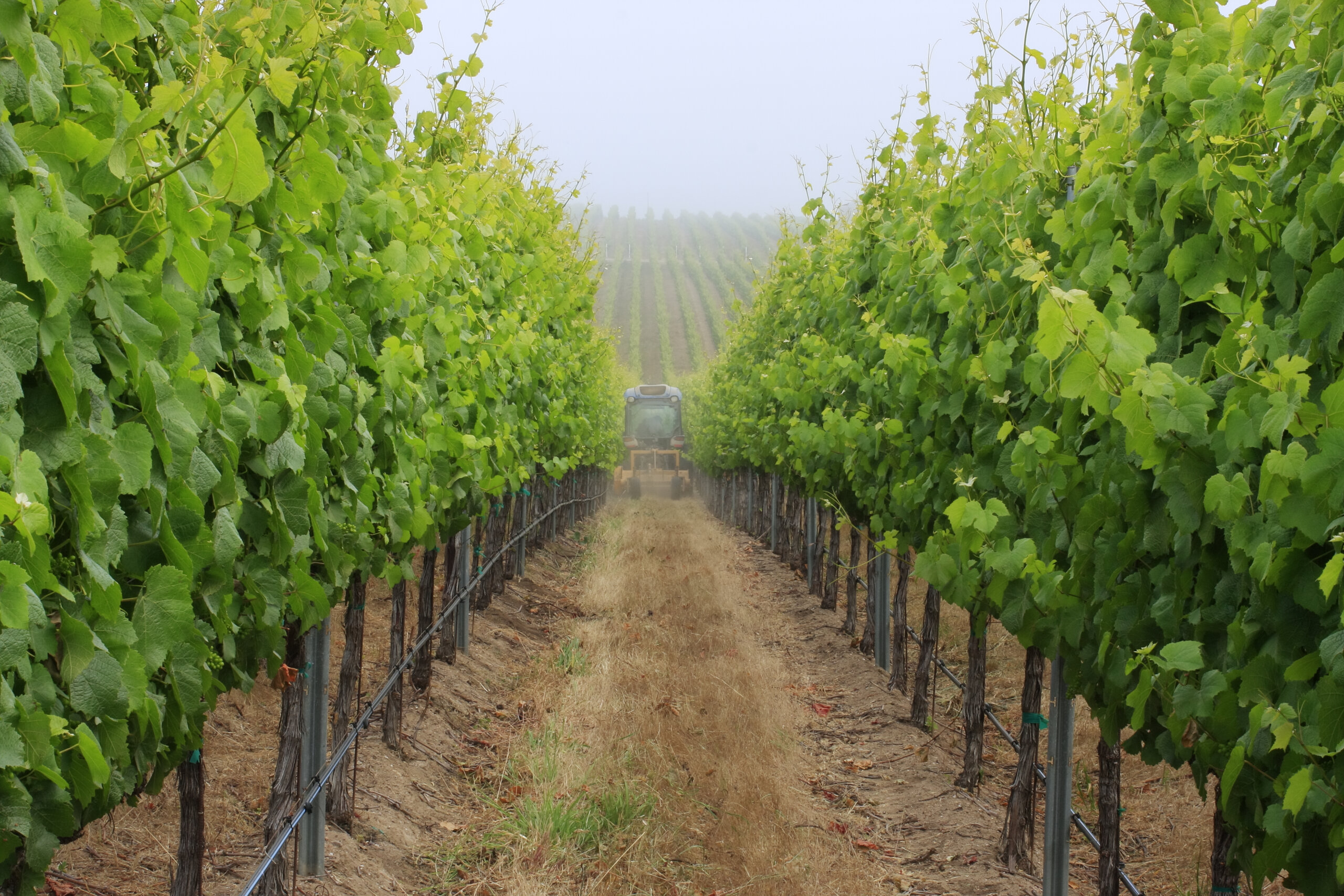
Mechanical mowing emerges as the gentlest termination method for cover crops, preserving the intricate soil structure that years of careful vineyard management have built. Unlike tillage, which disrupts soil aggregates and destroys beneficial fungal networks, mowing leaves root systems intact underground. This approach maintains the pore spaces and channels that cover crop roots created throughout winter.
Tillage creates immediate visual results but comes with hidden costs. The physical disruption breaks apart soil aggregates, leading to compaction issues later in the growing season. Research from California vineyards shows that tilled plots experience 23% more water runoff compared to mowed areas. For Temecula’s Mediterranean climate, where spring rains can be unpredictable, maintaining soil structure becomes critical for water retention.
The timing of mechanical mowing requires precision. Cut cover crops when they reach 50% bloom for optimal nitrogen cycling. At this stage, the C:N ratio allows for gradual decomposition without nitrogen tie-up. Winery operations benefit from this timing because it synchronizes with pre-bloom vineyard activities, allowing equipment access while preserving soil biology.
Flail mowers work exceptionally well for mixed cover crop stands, creating uniform residue distribution. The chopped material provides immediate soil coverage while slowly releasing nutrients. Set cutting height at 4-6 inches to leave stubble that continues photosynthesis and maintains some living root activity.
Crimping Techniques for Maximum Residue Coverage
Crimping represents the gold standard for cover crop termination when soil health takes priority. This technique flattens cover crops without cutting them, creating a dense mat of slowly dying vegetation that provides superior weed suppression and moisture conservation. The crimped material forms a natural mulch layer that regulates soil temperature and prevents erosion.
Proper crimping requires cover crops to reach physiological maturity. Wait until cereals like barley reach soft dough stage or legumes show 80% pod fill. The crimped stems maintain their structural integrity longer, providing extended soil coverage throughout the critical spring period when young vine shoots are most vulnerable to temperature fluctuations.
Roller-crimpers work best when pulled at 4-5 mph, applying sufficient downward pressure to flatten stems without shredding them. The crimped residue should achieve 90% soil coverage for optimal results. This coverage rate significantly reduces the need for additional vineyard maintenance activities during the busy spring season.
Custom crimping attachments adapt to vineyard row spacing, allowing precise application between vine rows without damaging trellis systems. The technique works particularly well with tall cover crops like triticale or rye, which create substantial biomass for long-lasting ground coverage.
Selective Herbicide Applications for Targeted Control
Selective herbicide applications offer precision control when mechanical methods aren’t feasible due to wet soil conditions or equipment constraints. The key lies in choosing materials that target cover crops while preserving beneficial vegetation and soil biology. Contact herbicides like pelargonic acid provide quick burndown without soil residual activity.
Glyphosate remains effective for cover crop termination but requires careful timing and application techniques. Apply when cover crops are actively growing but before they compete significantly with vine root systems. Use low-pressure, high-volume applications to ensure thorough coverage without drift concerns near sensitive vine tissues.
Selective graminicides like clethodim target grass cover crops while preserving legume companions. This approach allows nitrogen fixation to continue from clover or vetch while eliminating competitive cereals. The technique proves valuable when transitioning from mixed stands to pure legume ground covers.
Tank mixing contact herbicides with surfactants improves coverage on waxy cover crop leaves. Add ammonium sulfate to hard water to enhance herbicide effectiveness. These techniques reduce application rates while maintaining consistent results across varying field conditions.
Integration with Existing Vineyard Equipment
Successful cover crop termination depends heavily on integrating new techniques with existing vineyard equipment and workflows. Most California vineyards already own flail mowers that adapt easily to cover crop management with minor modifications. Adjusting cutting height and ground speed optimizes results without additional equipment investment.
Retrofit existing cultivators with crimping attachments for dual functionality. These modifications allow termination and shallow cultivation in a single pass, reducing fuel costs and soil compaction from multiple trips. The combined approach works well in organic operations where herbicide options are limited.
Sprayer modifications ensure precise herbicide applications in vineyard environments. Install drift-reduction nozzles and adjust boom height to accommodate cover crop height variations. GPS guidance systems prevent overlap applications while ensuring complete coverage in irregular vineyard blocks.
Equipment scheduling becomes crucial during spring transition periods when weather windows are limited. Plan termination activities around irrigation schedules and other vineyard operations to maximize efficiency and maintain consistent soil moisture levels throughout the process.
Maximizing Nutrient Release and Soil Benefits
Understanding Cover Crop Decomposition Rates
The timing of cover crop termination directly influences nutrient availability during the critical spring growth period. Different species decompose at varying rates, with legumes like crimson clover breaking down within 2-3 weeks, while grasses such as annual ryegrass require 4-6 weeks for complete decomposition. Understanding these rates allows vineyard managers to synchronize nutrient release with vine uptake needs.
Temperature and moisture conditions significantly affect decomposition speed. In Temecula’s Mediterranean climate, warm spring temperatures accelerate microbial activity, but inconsistent rainfall can slow the process. Monitoring soil temperature at 4-inch depth helps predict when decomposition will peak. When temperatures consistently reach 55-60°F, most cover crop residues begin rapid breakdown.
Carbon-to-nitrogen ratios play a crucial role in decomposition timing. High C:N ratios (above 30:1) in mature grasses can temporarily tie up soil nitrogen as microbes break down carbon-rich materials. This immobilization period typically lasts 2-4 weeks before nitrogen becomes available again. Planning termination dates around these natural cycles ensures nutrients are released when vines need them most.
Nitrogen Cycling from Leguminous Species
Leguminous cover crops provide the most significant nitrogen contribution to vineyard soils through biological fixation. Crimson clover and vetch can fix 80-150 pounds of nitrogen per acre, with approximately 60% becoming available to vines during the first growing season. The remaining 40% releases slowly over subsequent months, providing sustained nutrition.
Root nodule development varies throughout the growing season, with peak fixation occurring during flowering. Terminating legumes at full bloom captures maximum nitrogen content while ensuring rapid decomposition. The cellular structure of legume tissues breaks down quickly, releasing both fixed nitrogen and accumulated nutrients from root systems.
Incorporating diverse legume species extends the nitrogen release window. Early-flowering species like Austrian winter peas provide immediate spring nutrition, while later varieties such as rose clover continue fixing nitrogen into late spring. This staggered approach matches the extended uptake period that grapevines require for canopy development and fruit set. Visitors exploring the winery during spring often observe this careful timing in action across different vineyard blocks.
Carbon Sequestration Through Proper Residue Management
Surface residue management directly impacts long-term carbon storage in vineyard soils. Leaving 30-50% of cover crop residue on the soil surface creates a protective mulch layer while allowing controlled decomposition. This approach builds soil organic matter more effectively than complete incorporation, which accelerates decomposition and reduces carbon retention.
Mowing height influences carbon cycling dynamics. Cutting cover crops 4-6 inches above ground preserves root systems, which contribute more stable carbon to soil organic matter than above-ground biomass. These roots continue decomposing slowly underground, feeding soil microorganisms and building humus layers that improve water retention and nutrient cycling.
Strategic residue distribution enhances carbon benefits across vineyard rows. Concentrating organic matter in wheel tracks helps rebuild soil structure in compacted areas, while lighter coverage between vine rows maintains soil temperature regulation. This targeted approach maximizes both immediate benefits and long-term soil health improvements.
Monitoring Soil Microbial Activity During Transition
Soil biological activity indicators reveal the effectiveness of cover crop management strategies. Measuring soil respiration rates during spring transition provides real-time feedback on microbial processing of organic matter. Active soils typically show respiration rates of 2-4 pounds CO2 per acre per day, with peaks occurring 1-2 weeks after cover crop termination.
Visual soil assessment techniques help evaluate microbial health without expensive laboratory testing. Observing earthworm activity, fungal networks, and organic matter distribution provides immediate feedback on soil biological processes. Healthy transition periods show increased earthworm castings and visible mycorrhizal connections around vine roots.
Regular soil sampling during the 6-week transition period tracks nutrient availability changes. Testing every two weeks reveals nitrogen mineralization patterns and helps identify when supplemental fertilization might be necessary. This monitoring approach prevents both nutrient deficiencies and excess applications that could impact grape quality. Many vineyard professionals who participate in ebike tours through working vineyards witness these soil assessment techniques firsthand, gaining practical understanding of sustainable management practices.
Managing Water Resources During Transition
Balancing Residual Cover Crop Water Use
Spring presents vineyard managers with a delicate balancing act between maintaining beneficial cover crop functions and preventing excessive water competition. As temperatures rise in regions like Temecula, decomposing cover crops continue drawing moisture from the soil even as their growth slows. Understanding this transitional water demand helps optimize timing for termination or management adjustments.
Leguminous cover crops like crimson clover typically consume 15-20% less water during senescence compared to their peak growth phase, while grasses such as annual ryegrass maintain higher water uptake rates until complete termination. This difference becomes crucial when planning irrigation schedules that support both decomposing biomass and emerging vine growth. Modern winery operations monitor soil moisture at multiple depths to track these competing demands accurately.
Strategic mowing techniques can reduce water competition without sacrificing organic matter benefits. Cutting cover crops to 4-6 inches allows continued photosynthesis while reducing transpiration rates by approximately 40%. This approach proves particularly effective when soil moisture levels drop below 60% of field capacity, creating conditions where vine roots must compete aggressively for available water resources.
Irrigation Adjustments for Decomposing Biomass
Decomposing cover crop material creates unique irrigation challenges that require modified water application strategies. As organic matter breaks down, it initially ties up available nitrogen while simultaneously altering soil water retention characteristics. These changes demand careful adjustment of both irrigation frequency and application rates to maintain optimal growing conditions.
Freshly terminated cover crops increase soil surface area and create temporary water-holding microsites that can trap moisture near the surface rather than allowing deep penetration. This phenomenon requires increasing irrigation duration by 20-30% while reducing frequency to encourage deeper root development. Drip irrigation systems prove most effective during this transition, delivering water directly to the vine root zone while minimizing surface evaporation from decomposing plant material.
The carbon-to-nitrogen ratio of decomposing cover crops also influences water management decisions. High-carbon materials like mature grasses require additional nitrogen inputs, which affects water solubility and uptake patterns. Vineyard managers often implement fertigation programs during cover crop decomposition, combining water delivery with precise nutrient applications to support both microbial breakdown processes and vine development needs.
Soil Water Storage Optimization
Effective water storage optimization during spring transition requires understanding how cover crop residue affects soil physical properties. Decomposing organic matter temporarily reduces bulk density while increasing porosity, creating opportunities for enhanced water infiltration and storage capacity. These improvements can increase soil water-holding capacity by 10-15% in the first growing season following cover crop incorporation.
Strategic tillage timing maximizes these water storage benefits while minimizing disruption to soil structure. Light cultivation 2-3 weeks after cover crop termination incorporates surface residue without destroying beneficial soil aggregates formed during the cover crop growing period. This practice creates optimal conditions for spring rainfall capture and reduces dependence on supplemental irrigation during critical vine development phases.
Mulching with cover crop residue provides additional water conservation benefits, reducing surface evaporation rates by up to 50% compared to bare soil conditions. The key lies in maintaining adequate residue thickness (2-3 inches) while ensuring proper air circulation around vine trunks. Proper mulch management during wine tours demonstrates sustainable practices that visitors appreciate and understand.
Preventing Competition During Critical Vine Development
Critical vine development periods, particularly bud break through bloom, require careful management to prevent cover crop competition from stunting growth or reducing fruit quality. Research indicates that water stress during these phases can reduce berry set by 15-25%, making precise competition management essential for maintaining production targets.
Strip management techniques provide effective solutions by maintaining cover crops between rows while creating competition-free zones around individual vines. These strips should extend 3-4 feet from the vine trunk in young vineyards and 2-3 feet in established plantings. Regular monitoring of soil moisture within these strips ensures vine roots have priority access to available water resources.
Timing cover crop termination with phenological development stages optimizes resource allocation during critical growth periods. Terminating cover crops at 50% bud break provides adequate time for residue decomposition while eliminating active competition during bloom and early fruit development. This approach supports the sustainable vineyard practices that enhance both wine tasting experiences and long-term vineyard health through demonstrated environmental stewardship.
Species-Specific Management Strategies
Handling Winter Annual Grasses and Legumes
Winter annual grasses like barley, oats, and ryegrass require careful timing during spring termination in Temecula’s Mediterranean climate. These species typically reach peak biomass in late March to early April, making this the optimal window for mechanical termination. Mowing at the soft dough stage captures maximum nitrogen fixation while preventing seed set that could create volunteer issues in subsequent seasons.
Leguminous winter annuals such as crimson clover and field peas present unique opportunities for nitrogen contribution. Research indicates that crimson clover can fix up to 150 pounds of nitrogen per acre when properly managed. The key lies in timing termination just before full bloom, when root nodulation peaks but before the plant redirects energy toward seed production. This approach maximizes the nitrogen benefit for vineyard vines while maintaining soil structure through decomposing root systems.
For mixed grass-legume stands, the decision becomes more complex. Many Temecula vineyard operations find success with a staged approach: first mowing grasses at their optimal stage, then allowing legumes an additional 10-14 days to maximize nitrogen fixation. This technique works particularly well in winery settings where precision management can be closely monitored throughout the growing blocks.
Managing Deep-Rooted Perennial Species
Perennial cover crops like chicory, alfalfa, and deep-rooted grasses require fundamentally different spring management strategies. These species often establish extensive root systems that can extend 6-8 feet deep, creating both opportunities and challenges during the spring transition period.
Chicory management exemplifies the complexity involved. While its taproot breaks compacted layers and brings nutrients from deep soil horizons, aggressive spring growth can compete significantly with young vines for water resources. The most effective approach involves selective mechanical termination of chicory in a 4-foot radius around each vine while maintaining strips between rows for continued soil benefits.
Deep-rooted grasses present similar challenges but offer different solutions. Species like tall fescue and orchardgrass can be managed through strategic cutting heights. Maintaining a 4-6 inch stubble height during spring transition allows continued photosynthesis while reducing water competition. This approach proves particularly valuable in areas where soil erosion concerns outweigh competition issues.
Experienced vineyard managers often utilize these perennial species as “living mulch” systems. By implementing careful water management and strategic fertilization programs, deep-rooted perennials can coexist with vines throughout the growing season. However, this requires understanding specific soil conditions and vine age to avoid detrimental competition during critical growth periods.
Multi-Species Mix Termination Approaches
Complex cover crop mixes containing both annual and perennial species, grasses and legumes, require sophisticated termination strategies that account for varying growth patterns and maturity timing. The challenge lies in optimizing benefits from each species while maintaining practical management efficiency.
Successful multi-species termination often employs sequential management techniques. Early spring mowing targets fast-growing annual grasses first, followed by selective herbicide applications on perennial species, and finally mechanical incorporation of remaining biomass. This staged approach maximizes nitrogen fixation from legumes while preventing excessive water competition from vigorous grasses.
Timing becomes critical when managing diverse species mixes. A typical Temecula vineyard might contain crimson clover (peaking in early April), annual ryegrass (optimal termination in mid-April), and chicory (requiring management through late April). Coordinating these different timelines through workshops focused on sustainable practices helps vineyard managers develop site-specific protocols that optimize each species contribution.
Water management during multi-species termination requires careful consideration of soil moisture levels and weather patterns. Terminating water-hungry species during periods of adequate soil moisture prevents vine stress while maximizing decomposition rates of incorporated biomass.
Planning for Natural Senescence vs. Active Termination
The decision between allowing natural senescence and implementing active termination strategies depends on multiple factors including species composition, vineyard age, and seasonal weather patterns. Natural senescence offers cost advantages and maintains soil biological activity longer, while active termination provides precise timing control crucial for vine development.
Natural senescence works particularly well with winter annual species in years with typical spring rainfall patterns. These species naturally decline as temperatures rise and soil moisture decreases, creating a gradual transition that minimizes vine competition while maximizing soil organic matter contribution. However, this approach requires careful monitoring to prevent unwanted seed set in aggressive species.
Active termination becomes essential when weather patterns disrupt natural cycles or when precise timing is critical for vine development. Young vineyards often require active termination to prevent competition during establishment, while mature vineyards may benefit from extended cover crop presence for erosion control and soil health maintenance.
The most effective approach often combines both strategies, using natural senescence for appropriate species while actively managing others based on vineyard-specific needs and environmental conditions.
Long-Term Planning for Sustainable Systems
Crop Rotation Strategies for Vineyard Rows
Effective crop rotation in vineyard systems requires a multi-year perspective that balances soil health with operational efficiency. Most successful Temecula vineyards implement a three to four-year rotation cycle, alternating between leguminous covers like crimson clover and graminaceous species such as annual ryegrass. This approach prevents soil-borne pathogen buildup while maintaining diverse nutrient cycling patterns.
Strategic timing becomes crucial during spring transitions when you’re switching between crop types. Early-season legumes like vetch establish quickly in cooler temperatures, fixing nitrogen for summer vine growth. Meanwhile, warm-season grasses planted later provide erosion control during heavy winter rains typical in Southern California’s climate patterns. The key lies in understanding your vineyard’s specific microclimates and adjusting rotation timing accordingly.
Consider dividing vineyard blocks into rotation zones, allowing different areas to support varying cover crop species simultaneously. This creates habitat diversity for beneficial insects while spreading operational workload across multiple planting windows. Many premium wineries find this zonal approach reduces labor bottlenecks during critical spring establishment periods.
Integrating Cover Crops with Pest Management Programs
Modern vineyard pest management increasingly relies on cover crops as biological control foundations rather than simple ground coverage. Beneficial insects like lacewings and predatory mites overwinter in perennial cover crop residues, emerging in spring to control aphids and thrips before they reach damaging populations on grapevines.
Specific plant selections can target particular pest challenges common in California wine regions. Buckwheat and sweet alyssum provide nectar sources for parasitic wasps that control leafhopper populations, while mustard species release natural compounds that suppress nematode reproduction in sandy soils. These biological relationships require careful timing coordination with your existing spray programs.
Integration means adjusting herbicide applications to preserve beneficial cover crop stands while managing competitive weeds. Many vintners adopt reduced-spray zones within vineyard rows, allowing cover crops to establish naturally while maintaining clean cultivation in high-traffic areas. This selective approach maximizes ecological benefits without compromising operational access during harvest seasons.
Monitoring and Measuring Success Metrics
Quantifying cover crop performance requires tracking both immediate and long-term indicators across multiple growing seasons. Soil organic matter content, measured annually through laboratory analysis, provides the most reliable metric for assessing overall system health improvements over time. Most sustainable vineyard operations target 2-3% organic matter levels as optimal benchmarks.
Water infiltration rates offer immediate feedback on soil structure improvements, particularly important for managing runoff during Temecula’s intense winter storm events. Simple infiltration tests conducted each spring reveal how effectively cover crop root systems have improved soil porosity compared to cultivated areas. Successful programs typically show 40-60% improvement in infiltration rates within three years.
Biodiversity monitoring through regular insect surveys documents beneficial species populations and their seasonal patterns. Photography-based vegetation monitoring helps track cover crop establishment success and identify areas requiring replanting or species adjustments. Digital record-keeping allows you to correlate cover crop performance with wine quality metrics over multiple vintage years.
Economic Assessment of Cover Crop Investment
Financial analysis of cover crop programs must account for both direct costs and indirect benefits across extended timeframes. Initial establishment costs typically range from $150-300 per acre annually, including seed, labor, and equipment expenses. However, successful programs often reduce irrigation requirements by 15-20% through improved water retention, creating measurable utility savings.
Reduced fertilizer inputs represent significant cost savings as cover crop nitrogen fixation supplements synthetic applications. Many Temecula vintners report 30-40% reductions in nitrogen fertilizer purchases after three years of consistent leguminous cover crop management. Additionally, improved soil structure reduces cultivation costs and equipment wear over time.
Premium wine markets increasingly value sustainable production practices, allowing certified sustainable vineyards to command higher grape prices and tourism revenue. The investment in comprehensive cover crop systems positions your operation for long-term market advantages while building soil capital that supports consistent quality production.
Successful sustainable vineyard management requires patience and commitment to long-term thinking rather than quick fixes. The transition period challenges even experienced vintners, but those who persist through initial learning curves develop resilient systems that support both environmental stewardship and premium wine production. Whether you’re planning your first cover crop planting or refining established practices, remember that each growing season builds upon previous investments in soil health and ecosystem balance.